Overmind JournalAutomation
The second question. Why accountability needs a voice
€480 in express freight, a green check mark and a plant manager who asks again. What happens when agents close a case and a person knows something they missed?
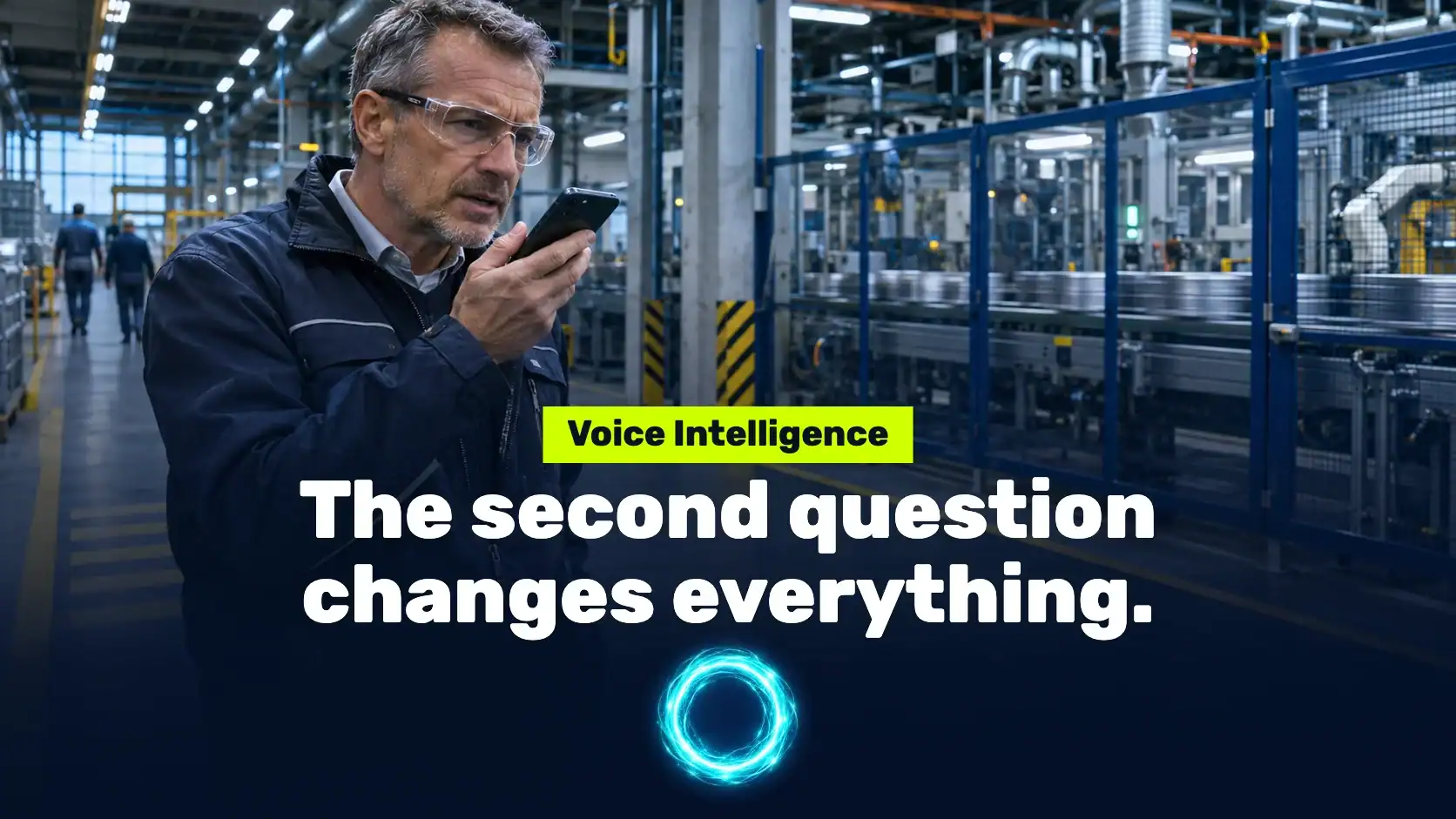
€480 in express freight. The plant manager sees the charge on his phone on the way to the production line. There’s a green check mark beside the order. He stops walking. Yesterday, he was there when the shift team moved production to line two. Why did the shipment still have to get to the plant so urgently?
In this fictional case, the purchasing agent and the supplier handled the entire order on their own. The plant manager is still accountable for the outcome. He wants to know what his agent knew when it placed the order.
“Did the purchasing agent know that?”
Plant manager: “Why did we pay €480 for express freight yesterday?”
Overmind: “The supplier confirmed standard delivery for Thursday. The production schedule showed a Wednesday restart. Purchasing had authorized up to €500 in express freight for that situation.”
Plant manager: “But we’d already moved production to line two by eleven. Did the purchasing agent know that?”
Overmind: “The decision log shows the 9:40 a.m. production schedule. The move was recorded in the shift log at 11:05 a.m. That entry was unavailable to the agent when it placed the order at 11:18 a.m.”
The second question changes everything. The first answer explains why the order complied with the approval rule. Now the plant manager knows the agent decided using an outdated schedule. He can point to the moment when information from the shop floor fell out of the process. He also knows where to focus before the next order goes out.
What the people accountable need to be able to do
Overmind lets the people accountable for an outcome talk directly about the decisions their agents made. As work continues, they can ask what happened, what the decision was based on and where they can still intervene.
- See the evidence. Which rule was in force? Which production schedule did the agent use? Which transaction proves the order was placed? When a partner’s records are outside Overmind’s view, it explains exactly what the partner’s confirmation establishes and what remains open.
- Ask about other cases. “Which other express orders used a production schedule older than the latest shift update?” A question on the shop floor becomes a review of the whole process.
- Act within their authority. “Hold open express orders for line one until 2 p.m.” That’s a new instruction. Overmind checks permissions and order status, asks for confirmation and reports back from the ordering system which orders were actually held and which were already binding.
The moment that matters in a pilot
Agents can handle a thousand routine transactions without anyone picking up the phone. As they take on more decisions, the one conversation that exposes a recurring mistake can become more valuable. The plant manager can skip reading a hundred order logs. He can ask the moment something doesn’t add up. On his way to the line. In his own language. Drawing on what he knows from the last shift.
That’s how we would judge an Overmind pilot.
Can the person accountable talk through a disputed case until they reach the decisive cause or find the missing evidence? And by the end of the conversation, do they know what they can still do?