Overmind JournalImprove
What the night shift knows: A handover at a South African mine
Twice before dawn, material stopped flowing evenly at a transfer point. By the next handover, the crew needs to know exactly what was seen and who is following it up.

Just before six, the night and day crews meet in a quiet room overlooking a South African open-pit mine. A night-shift operator has one more thing to pass on. Twice in the early hours, the flow of material faltered at a transfer point. Both times it picked up again. Nobody has established the cause. The day crew needs enough detail to follow up, and the night crew would quite like to get home.
This is a fictional shift. It illustrates a practical question for Overmind. Can a crew pick up a piece of unfinished work twelve hours later without having to find the person who first noticed it?
Before the shift, find out who owns the open item
The incoming supervisor opens the shift record. The equipment field contains the night operator’s words, “number three”. There are two observations, the times the operator recorded them and a name against the follow-up. The maintenance coordinator is due to report back to the control room at midday. There is still a question mark against the equipment identifier.
The supervisor asks the night operator what “three” means here. It is transfer point three. Together they check the identifier on the operator screen and enter TP-03 in the open record. The supervisor can now give the day crew a precise starting point. They know what their colleagues saw, which piece of equipment it concerns and whom to ask for the next update.
During the shift, speak or type where it makes sense
Later that morning, in an area where the mine permits its use, the day operator starts a voice note using a headset approved for the site. She refers to the two overnight interruptions. Overmind asks a short question. “Was that uneven flow you observed, or do you have a measured stop?” She checks her wording. The night crew saw the flow falter twice. They did not record a stop duration. Overmind reads back the identifier and the observation for her to confirm.
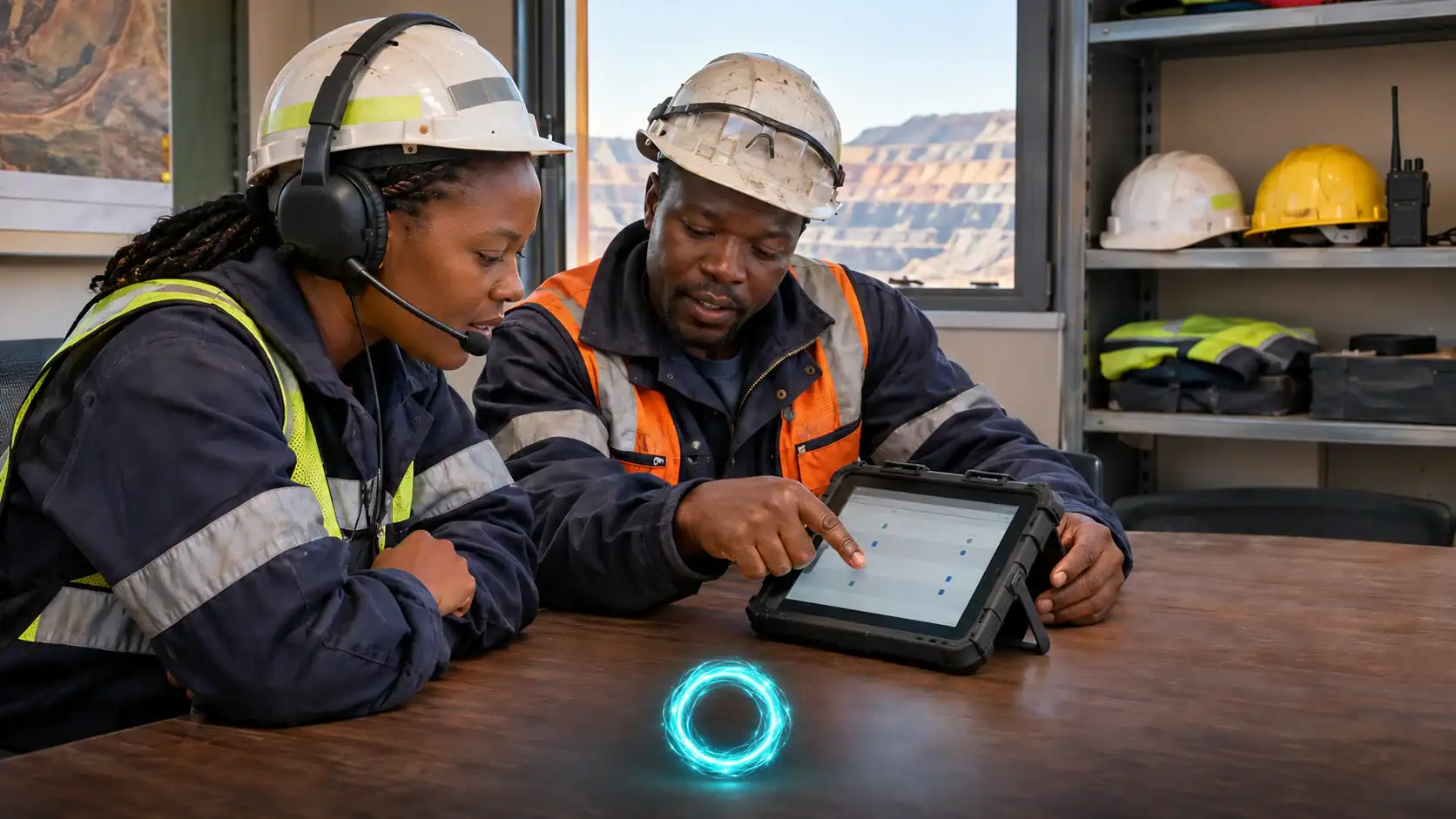
In the noisy part of the plant she leaves the headset alone. Back in the control room, standing still, she types on a rugged tablet. She checks TP-03 against the tag on the operator screen and adds a note to the same record. If a photograph would help, it can go with that note wherever the site permits photography. The operator switches on the microphone for the voice note and turns it off when she finishes. The entry records an observation. Equipment controls and any safety clearance remain with the mine’s authorised personnel and procedures.
At handover, give the next crew a person and a time
At the end of the day, Overmind prepares a draft from the record. It names the night operator as the source of the two observations, carries over their times and gives the time of the day operator’s check of the equipment tag. There is also a midday update from the maintenance coordinator. The cause is still open. The coordinator will report back to the incoming supervisor at the evening briefing.
The day operator reviews the draft. She corrects the wording from “two stoppages” to “material flow faltered twice” before confirming it. The evening crew accepts the open item with its owner and next update intact.
What does “number three” mean on this site?
That small exchange is a starting point for Social Coding. The crew, control room operators and maintenance staff work through actual handover language together. When someone says “number three”, which follow-up question gets them to the equipment tag with the least fuss? When is it worth reading a detail back aloud?
During a pilot, Overmind could propose a rule that asks for the transfer point whenever that nickname comes up. The teams try it against examples from their own shifts, adjust the question and confirm where the rule applies. Another mine would need to establish its own terminology.
The crew brings two more phrases to the trial: “transfer point three” in English and “oorlaaipunt drie” in Afrikaans. Both refer to TP-03 at this site. The crew tries each one aloud and in writing to see whether the right equipment tag comes back.
Measure what happens at the next handover
A pilot can start with one crew and one recurring type of open item. Time a few comparable handovers before and during the trial. Record how long the incoming operator spends finding a case, how many open items have a named owner and how often someone has to ask a question the previous shift already answered. Those figures would show whether the handover improved. At TP-03, the immediate test is simple. Can the next crew explain what happened, what is still unknown and who will report back?