Overmind JournalAutomation
A green tick won’t empty a bin
The stop is marked complete. Cardboard is still piling up behind the store. Social Coding helps keep the missed collection from getting lost at shift change.
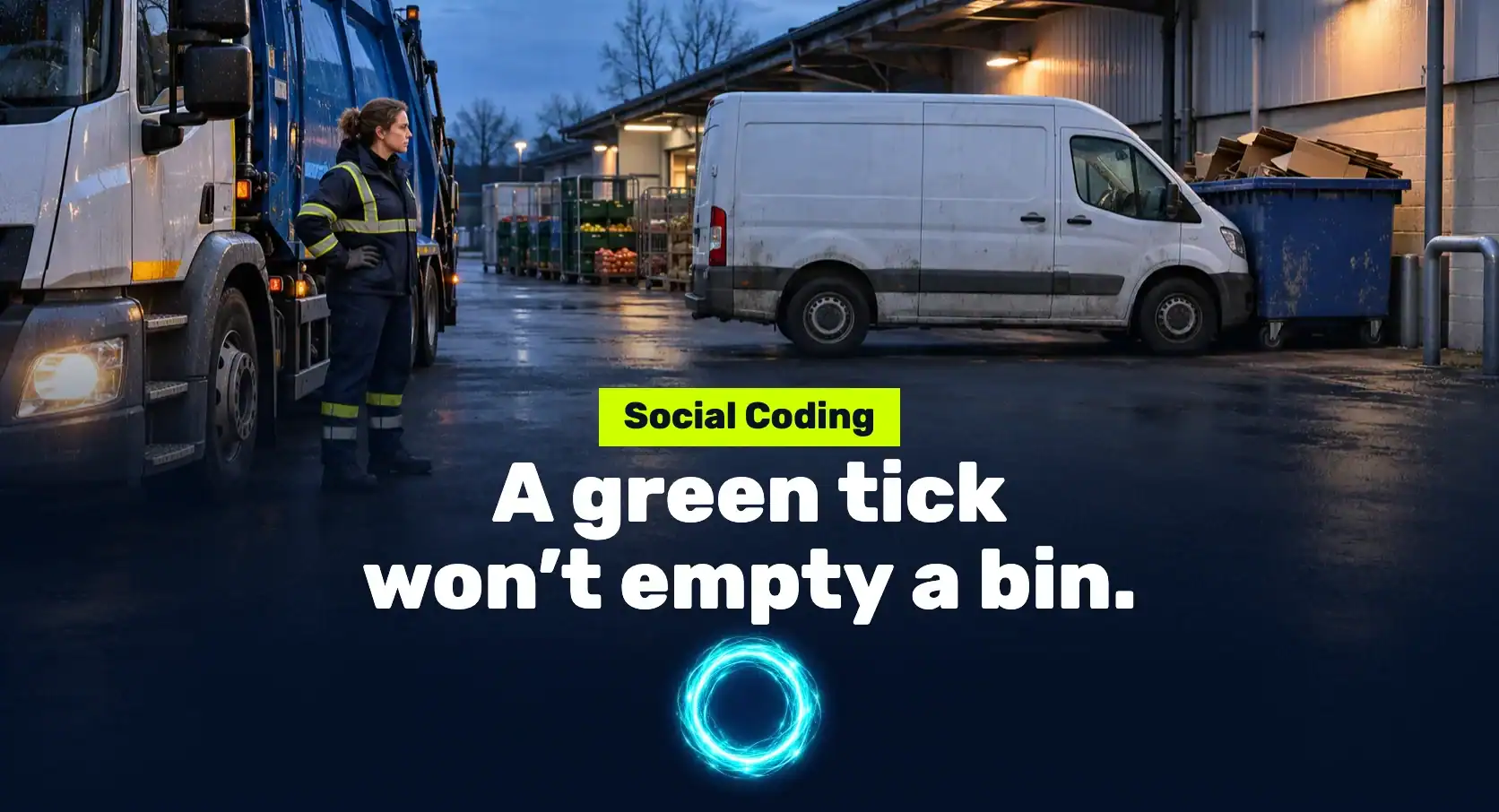
6:42 a.m., route stop 17. The front cardboard bin is empty. A delivery van is parked across the way to the rear bin. The crew waits a moment. There are other collections on the route. Just inside the store’s back door, boxes from the morning delivery are already stacking up.
At eight, the store manager calls. There’s a full bin in the yard. Customer service can see a green tick next to the stop. The person on the phone is looking at the very entry she’s supposed to use to tell him what to do with the cardboard.
This fictional case starts with a familiar obstruction. It gets expensive when, at every handover, someone has to find out all over again which bin is still full and whose job it is to empty it.
The question that keeps the second bin on the list
Back to 6:42 a.m. Here’s how the crew could report the problem with Overmind. The truck is still stationary. The crew member can report what she sees. In this example, Overmind can access the route stop and the two bins registered there.
Collection crew: “Stop 17. The front one’s empty. There’s a delivery van in front of the back one.”
Overmind: “So the rear bin, number 217, is still full because access was blocked?”
Collection crew: “That’s right. 217 still needs emptying.”
Overmind: “217 stays open. Dispatch will get the location and the reason.”
Four lines are enough because the team has already agreed what matters. The dispatcher can see two different outcomes in the same yard. Once she approves a return visit, the next shift gets a work order for one specific bin.
Social Coding starts with what the crew knows
Collection crews, dispatch and customer service sit down together with real exceptions. “The one at the front” makes perfect sense when you’re standing in front of the bins. The next shift needs the bin number. “We’ll go back” might be a plan to dispatch. The store manager may hear it as a promise.
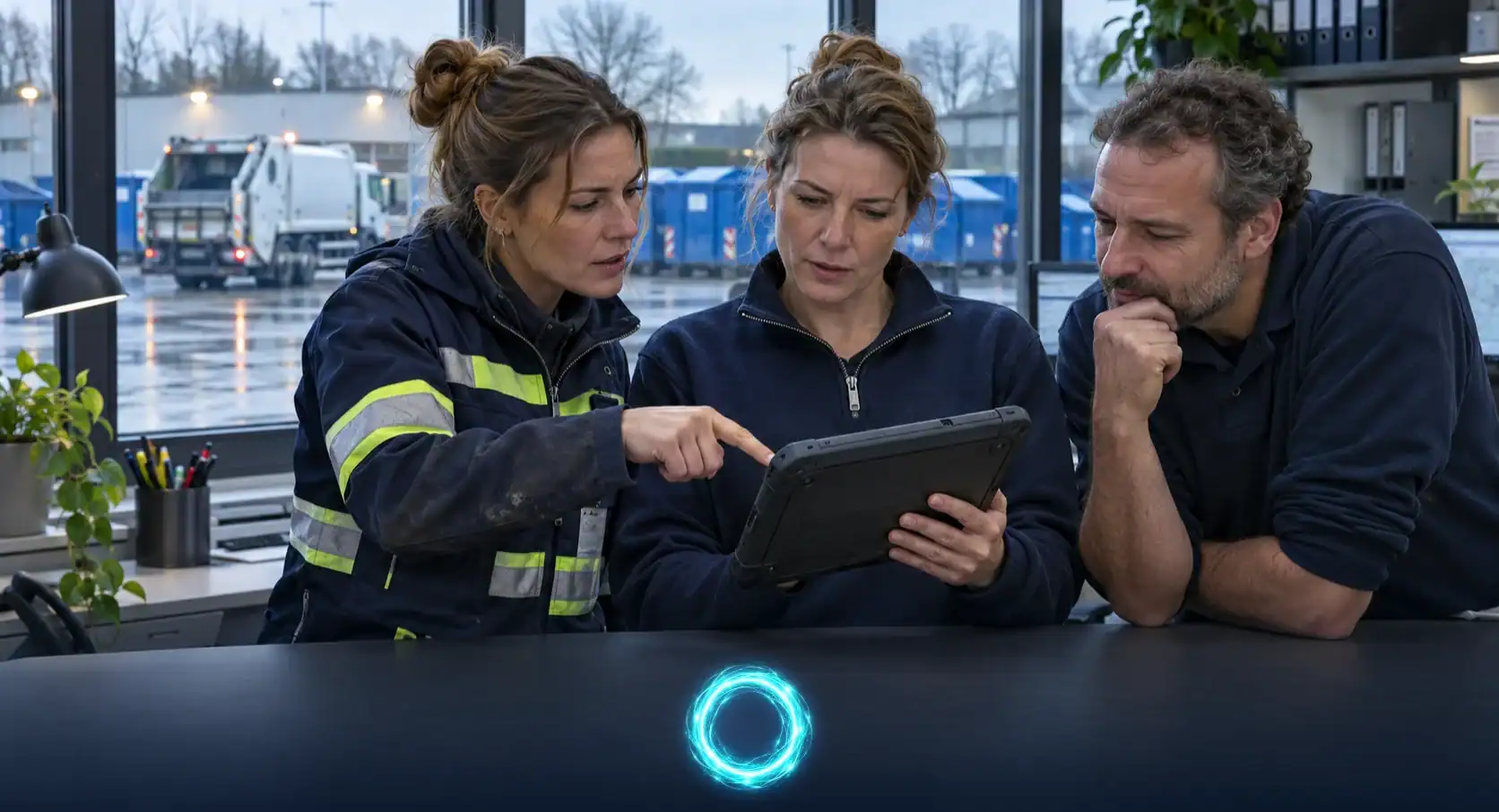
With Social Coding, the team turns those distinctions into rules for the conversation, then tests and approves them. What detail is missing? Who can commit to a return visit? What counts as confirmation of collection? They run through the case and check what happens if “the one at the back” could mean either of two bins. Overmind then asks for the number before assigning the report.
Automatically pass it on until collection is confirmed
- To dispatch. Overmind passes on the bin number, location and reason. The dispatcher decides whether to send a crew back.
- To the next shift. After approval, the crew receives the work order for bin 217. Customer service can see that the return visit is approved and collection is still pending.
- Back to customer service. At 2:07 p.m., the crew reports bin 217 emptied. That confirmation closes the order and gives customer service a time to quote.
“The rear cardboard bin was emptied today at 2:07 p.m.”
One sentence. Behind it are an observation beside the truck, a dispatcher’s approval and a report from the next shift. The person on the phone has an answer the store manager can use. If the customer has agreed to a channel for updates, Overmind can send the same confirmed status automatically. The separately collected cardboard can go on for processing. Out in the yard, there’s room for the next load. That’s where the circular economy starts for this store.
A pilot can test this on one route. How often can dispatch deal with a comparable exception without calling the crew back? How much time passes between the first report and confirmed collection? The second bin is the test.